People tend to think a breed's grooming needs are about style—the Poodle cut, the Schnauzer's beard. Really, it comes down to one thing: the coat. Once you know what kind of coat your dog has, almost everything else—how often to come in, where it mats, what you should never do—falls into place. After years of grooming just about every coat type across the Waunakee and Madison area, here's the practical version, by coat and by breed.
It starts with the coat
Five broad categories cover most dogs. (For how often each one needs a full groom, we broke that down by coat type here—this is about what each coat actually needs.)
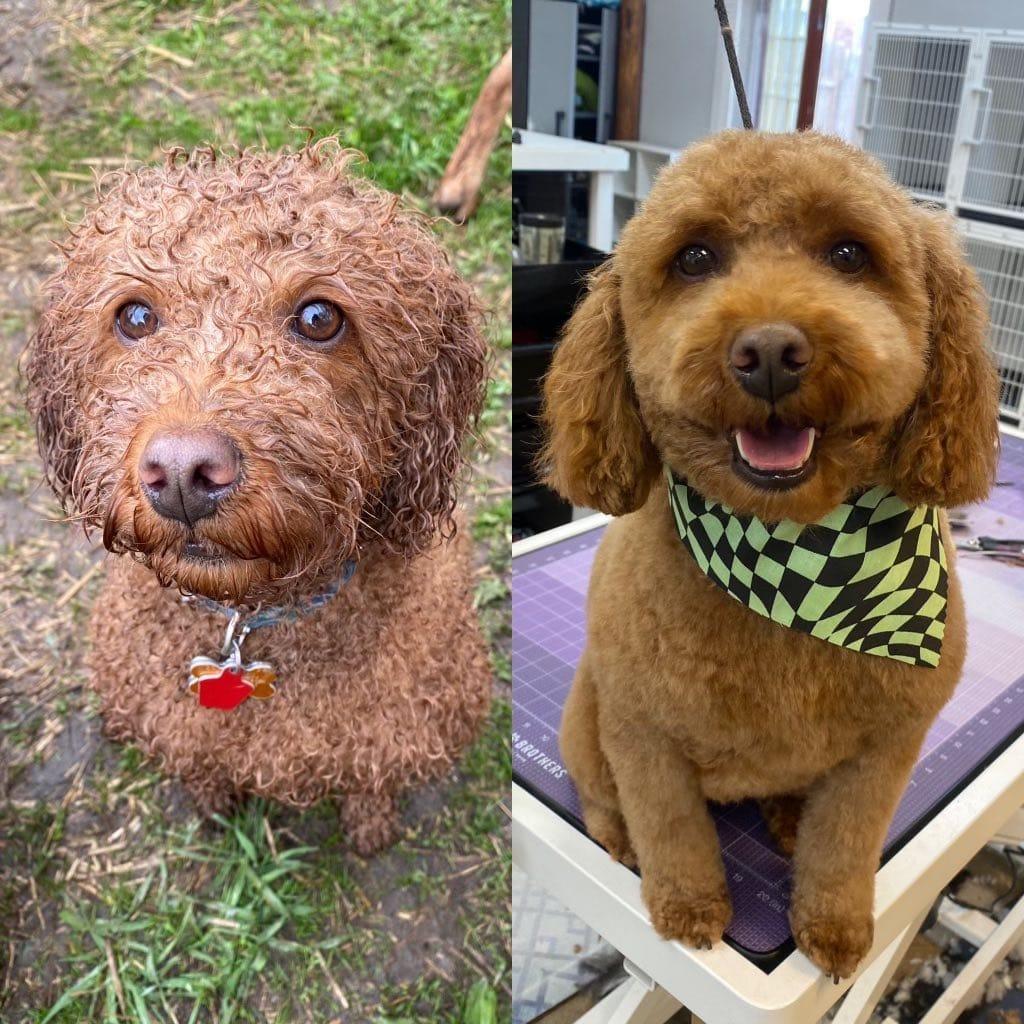
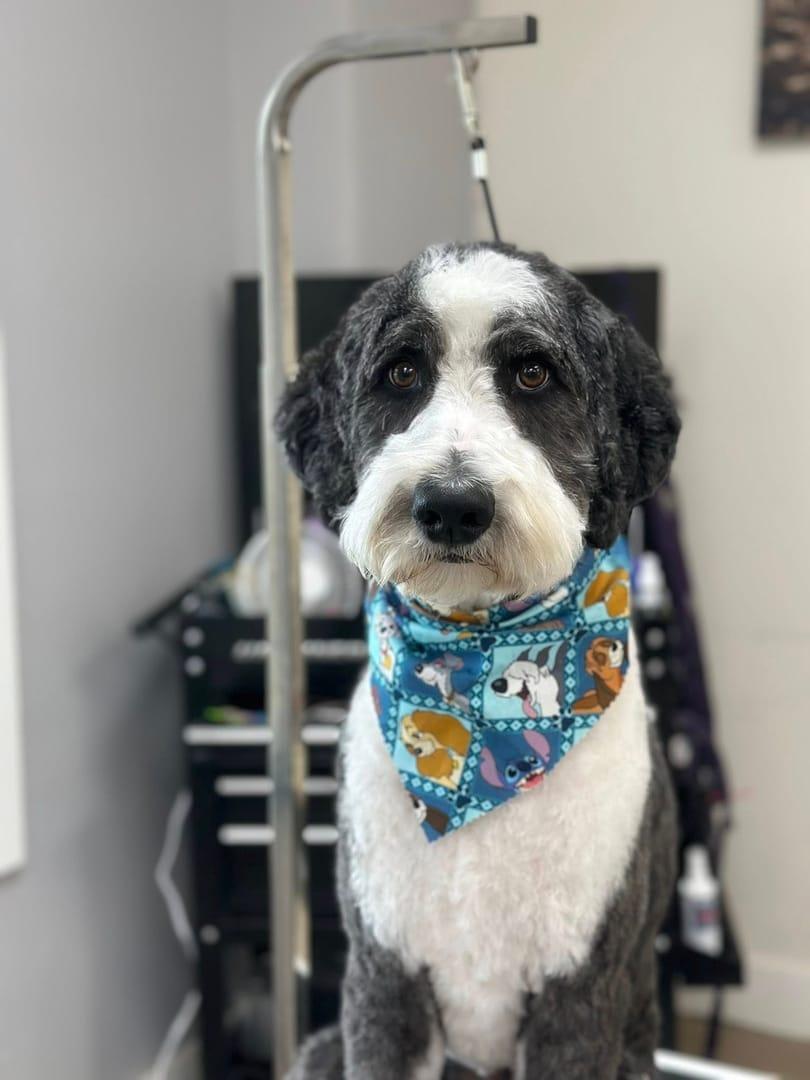
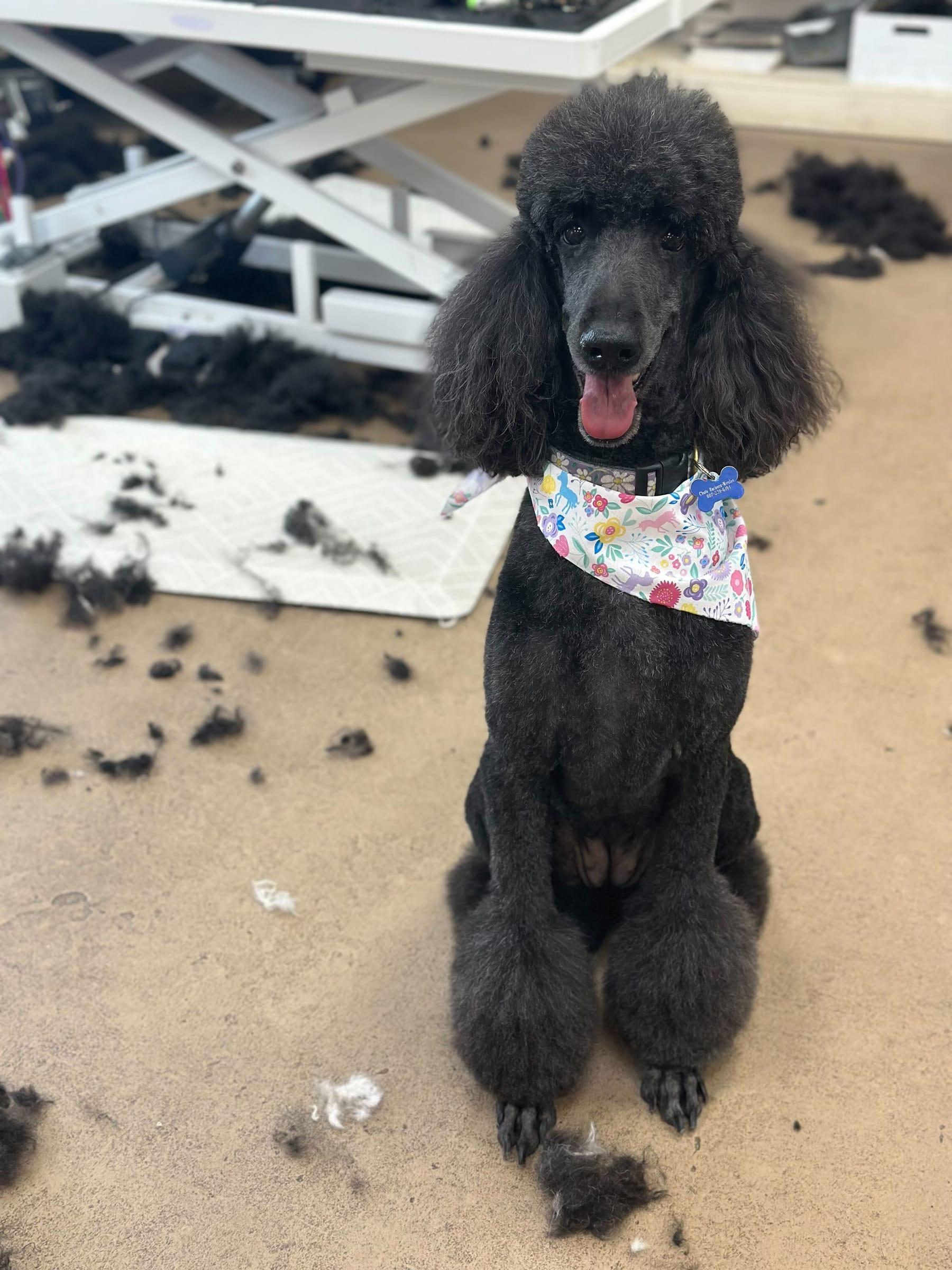
- Curly and wavy—Poodles, Doodles, Bichons. The coat never stops growing and mats close to the skin, often before you can see it, so brushing has to reach all the way down, not just skate across the top. When a curly coat has already matted, the honest and kinder move is usually a shorter reset cut rather than hours of painful dematting; the AKC notes that tight mats trap moisture and irritate the skin underneath.
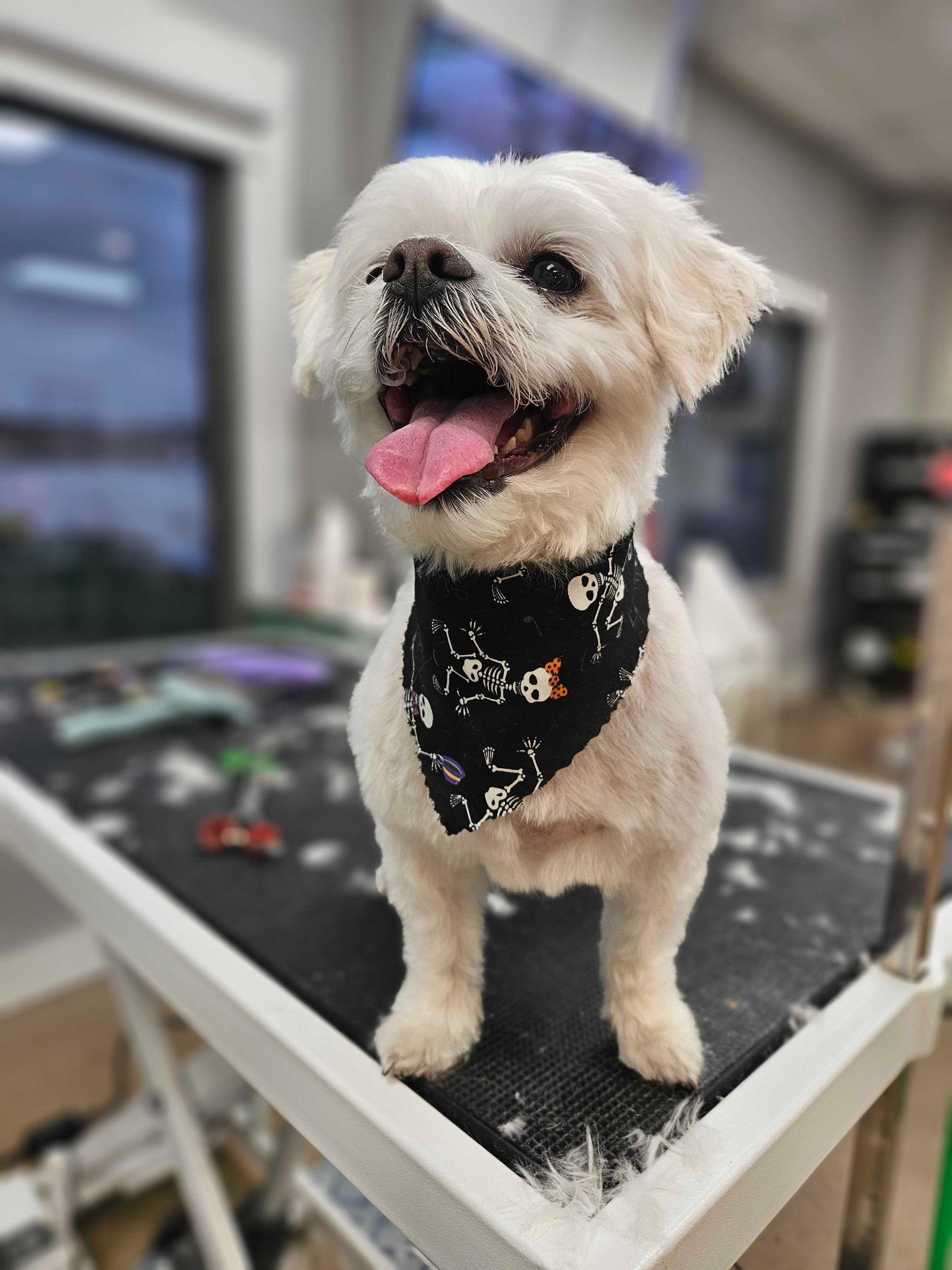
- Long and silky—Shih Tzus, Maltese, Yorkies. Beautiful, and quick to tangle behind the ears, under the legs, and around the rear. These breeds are also the most prone to tear staining, so the hair around the eyes needs regular, careful trimming.
- Double-coated—Huskies, German Shepherds, Golden Retrievers, Aussies. The single most important rule in this whole guide: don't shave them. That soft undercoat is insulation and cooling at once. Shave it down and, as the AKC explains, the undercoat grows back faster than the guard hairs and crowds them out—so the coat returns patchy, loses its weather protection, and leaves skin more exposed to sunburn and overheating. The right answer is a thorough de-shed to pull the dead undercoat out, not a clipper.
- Short and smooth—Labs, Beagles, Boxers, Greyhounds. The low-maintenance crowd, but "low" isn't "none." They still shed—a good de-shed and bath cuts down what ends up on the couch—and their short coats make it easy for us to spot lumps, fleas, and skin changes while we work.
- Wiry—Schnauzers and most Terriers. Here's the catch owners don't expect: running clippers over a wiry coat softens it and can dull the color and texture over time, because clipping disrupts the way those coarse hairs grow back. If keeping that classic terrier texture matters to you, tell us before we start and we'll talk through the right approach for your dog's coat.
The spots we check by breed
Beyond the coat, certain builds come with certain trouble spots. These are the ones we part the fur and look at, every visit:
- Facial folds (Bulldogs, French Bulldogs, Pugs)—those wrinkles are lovely, and they trap moisture, which is exactly how skin-fold infections get started. The fix is boring and it works: keep the folds clean and dry. If a fold looks red or raw or smells off, that's a vet visit, not a grooming one.
- Floppy or hairy ears (Cocker Spaniels, Bassets, Poodles, Doodles)—a covered ear canal stays warm and damp, and VCA points out that trapped moisture is a leading cause of ear infections. We dry ears thoroughly after every bath and keep the opening tidy for airflow. Head-shaking, odor, or dark discharge means it's time to call your vet.
- Eyes and tear stains (Maltese, Shih Tzu, and light-coated dogs)—we keep the hair trimmed back off the eyes so it can't scratch or irritate, and clean the area gently. Heavy, persistent staining is worth mentioning to your vet.
- Nails (every breed)—overgrown nails aren't just cosmetic. Vets warn they splay the toes and change a dog's gait, straining the joints over time. If you can hear them click on the floor, they're due.
The mistakes that actually hurt
A few well-meaning habits do real damage. The big ones:
- Shaving a double coat—worth repeating, because it can permanently change how the coat grows back.
- Bathing too often—stripping the natural oils dries the skin and can start the very itch you were trying to fix. Most dogs need a bath far less often than people assume.
- Skipping brushing between grooms—this is how a small tangle behind the ear becomes the mat we have to shave out six weeks later.
- Going after a mat with scissors—the skin tents up into the base of a tight mat, and it's one of the most common ways dogs get accidentally cut at home. Leave the stubborn ones to us.
Bring us your breed
Whatever's on the end of the leash—a doodle that mats if you look at it wrong, a shepherd blowing his coat, a Lab that just needs a bath and a nail trim—we tailor the groom to the coat in front of us and go at your dog's pace. We see fewer dogs a day than the big chains on purpose, so there's time to do it right. Not sure whether your dog is due? The five signs a dog is overdue are a good place to start.
We're just outside North Madison in Waunakee, an easy drive for families in Middleton, Sun Prairie, and DeForest and Windsor. Book a groom or tell us about your dog, and we'll build the routine around their coat.